

Introduction Artificial intelligence is becoming a practical part of modern business software. Instead of being limited to experimental projects, AI can now be incorporated into applications used for sales, finance, customer service, operations, inventory, reporting, and workflow management. AI in Business Software can help companies automate repetitive work, analyze large amounts of information, identify patterns, […]

Introduction As a business grows, managing sales, inventory, finance, employees, purchasing, customer information, and daily operations through separate systems can become difficult. Data may be duplicated, teams may spend too much time switching between applications, and management may struggle to get a clear view of business performance. This is where ERP software for small business […]

Introduction As a business grows, its technology infrastructure usually becomes more complex. More employees, devices, applications, servers, cloud services, networks, and business systems mean there are more things to manage and protect. IT Infrastructure Management involves maintaining and monitoring the technology environment that supports daily business operations. This can include networks, servers, cloud platforms, computers, […]
Introduction Businesses generate large amounts of data every day from sales, finance, inventory, operations, customers, marketing, and other departments. The challenge is not simply collecting this information. The real challenge is turning it into useful insights quickly enough to make better decisions. A Business Intelligence Dashboard brings important business data into one visual interface. Instead […]

Introduction When a business needs technical expertise, one of the first decisions is whether to build an in-house IT team or work with an IT outsourcing partner. Both models can work well, but the right choice depends on the company’s budget, project requirements, internal capabilities, growth plans, and long-term technology strategy. The IT Outsourcing vs […]
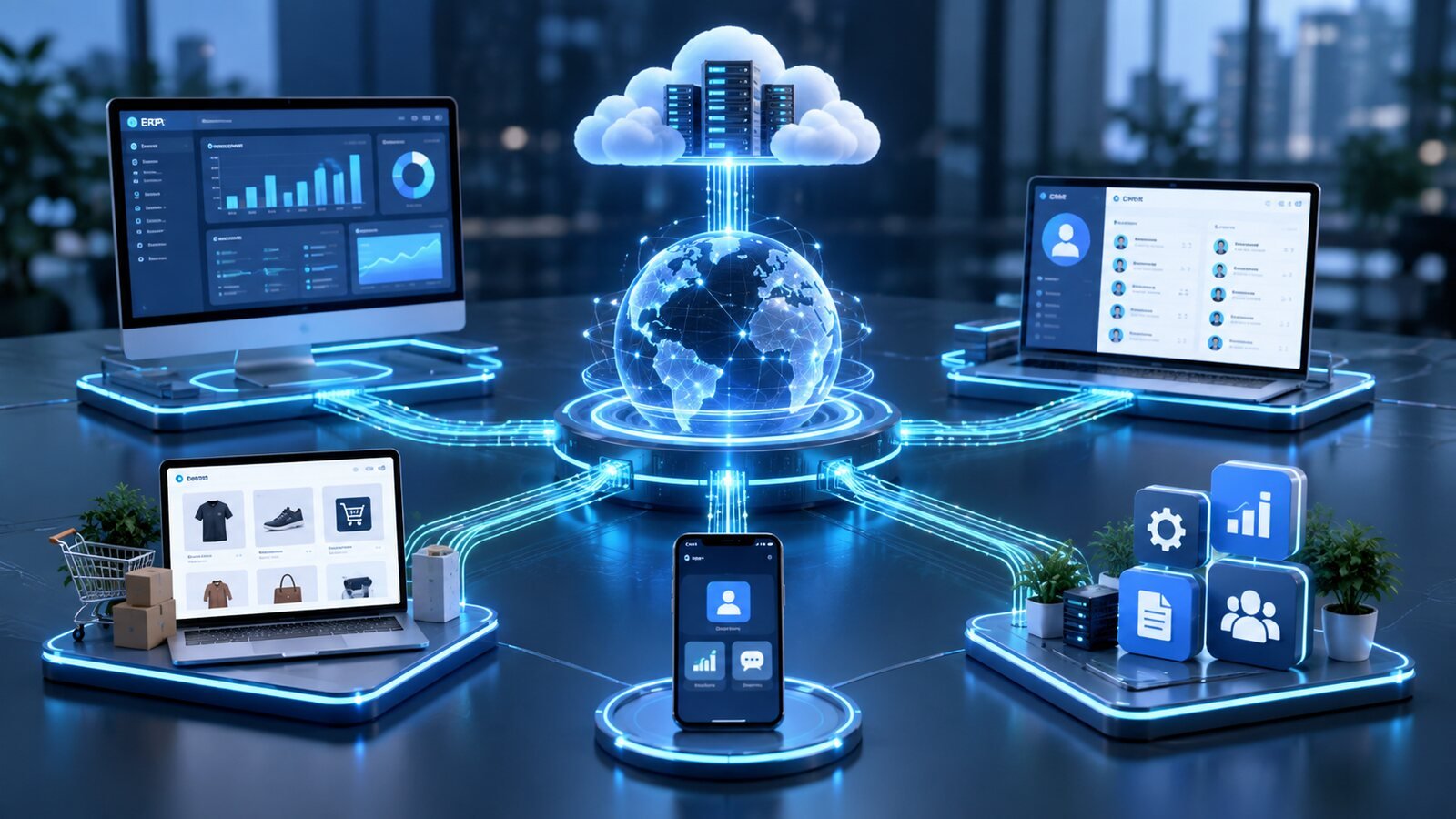
Introduction Modern businesses rarely rely on a single software application. A company may use an ERP system for operations and finance, a CRM for customer management, an e-commerce website for online sales, payment platforms for transactions, and separate tools for marketing, HR, analytics, or customer support. When these applications operate independently, employees may need to […]
Introduction As businesses grow, repetitive tasks can consume a significant amount of employee time. Data entry, invoice processing, approvals, customer follow-ups, reporting, inventory updates, and other routine activities can become difficult to manage manually. Business Process Automation helps organizations use software and technology to perform repetitive, rule-based tasks with less manual intervention. The goal is […]

Introduction Managing inventory becomes increasingly difficult as a business grows. More products, suppliers, warehouses, sales orders, purchase orders, and customer demands can make it challenging to maintain accurate stock records. When inventory is managed through spreadsheets or disconnected systems, businesses may face stock discrepancies, overstocking, stockouts, delayed orders, and unnecessary carrying costs. ERP Inventory Management […]

Introduction ERP implementation can transform how a business manages finance, inventory, sales, purchasing, production, human resources, and other core operations. By bringing business processes and data together, an ERP system can improve visibility, automation, and decision-making. However, implementing an ERP system is not simply a matter of installing software. It often involves changes to existing […]

Introduction Choosing an Enterprise Resource Planning (ERP) system is an important technology decision for a growing business. However, selecting the right ERP software is only one part of the process. Businesses must also decide how the ERP will be deployed. The two common deployment models are Cloud ERP and On-Premise ERP. Cloud ERP is hosted […]